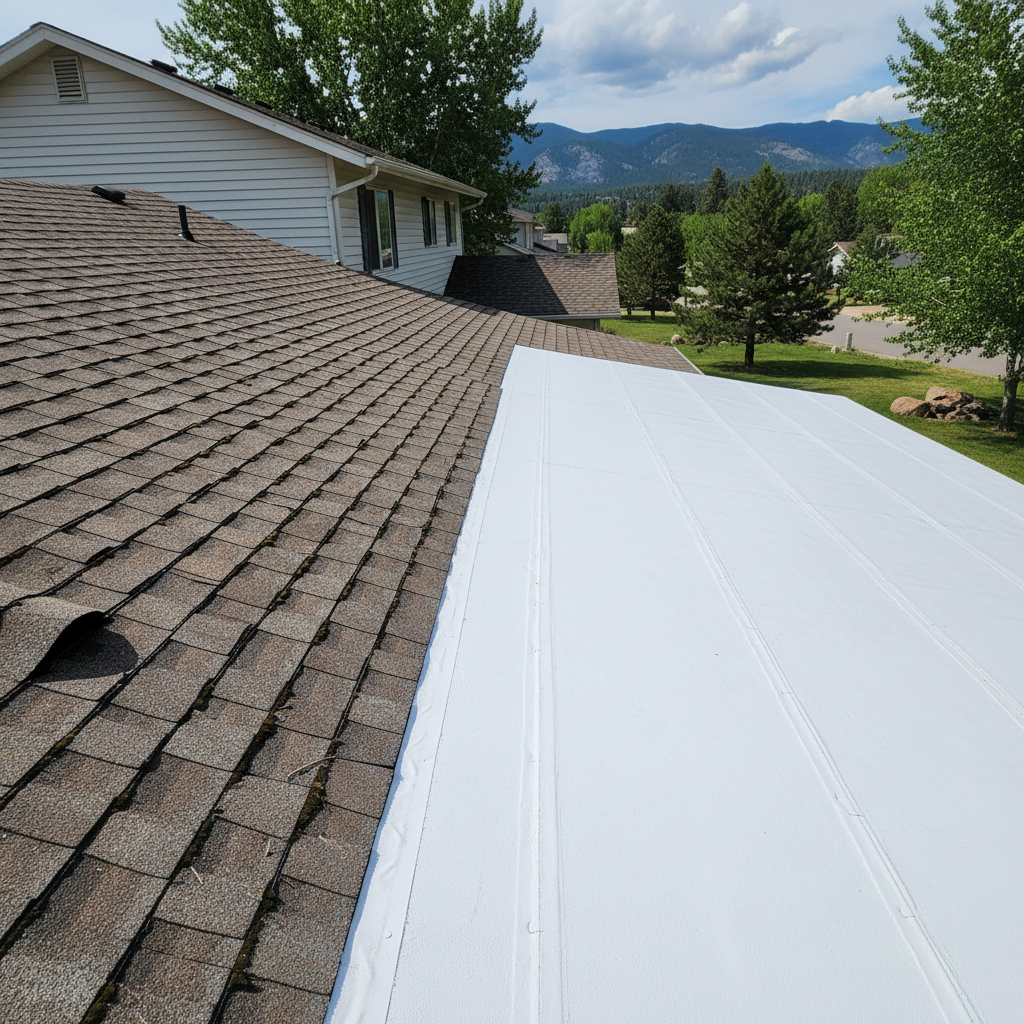
TPO Roofing: Fully Adhered vs. Mechanically Attached for Missoula
Thinking about a TPO roof for your commercial building here in Missoula? Good call. TPO, or Thermoplastic Polyolefin, makes a fantastic choice for flat or low-slope roofs. It's tough, saves energy, and really stands up to our Montana weather. Once you've settled on TPO, though, you've got another decision to make: how should we put it on? The two main ways are fully adhered or mechanically attached. I've seen both types installed all over town, from the businesses downtown to the industrial spots out by the airport, and each method has its own good points and bad.
Fully Adhered TPO: The "Glued Down" Approach
This method is pretty much exactly what it sounds like. We use a special adhesive to glue the TPO membrane right onto the insulation board. That board, by the way, is often glued or screwed down to the roof deck itself. This creates a really smooth, continuous surface without any fasteners poking through the membrane.
Pros of Fully Adhered TPO:
- Appearance: It just looks cleaner, smoother. You won't see any wrinkles or ripples from fasteners. If your roof is visible from higher buildings or has a public-facing side, this can be a huge plus.
- Wind Uplift: When we do it right, this method offers excellent resistance to wind uplift. That's a big deal here in Missoula, especially when those strong winter winds come tearing down the valley, right? There's no flapping or billowing because the membrane is completely bonded.
- Puncture Resistance: Since the substrate fully supports it, this system tends to resist punctures a bit better, say, from dropped tools or foot traffic.
- Longevity: A lot of folks believe fully adhered systems last longer because the membrane isn't stressed at any fastener points.
Cons of Fully Adhered TPO:
- Cost: Generally, this is the more expensive option up front. The adhesive itself isn't cheap, and the installation can take more labor. Plus, it needs specific temperature and humidity conditions to bond correctly.
- Installation Time: It can take longer to install, especially if the weather isn't perfect for the adhesive to cure.
- Repair Difficulty: While it's less likely to leak, if a leak does happen, it's sometimes tougher to find the exact spot because water can travel further under the membrane before it shows up inside.
Mechanically Attached TPO: The "Screwed Down" Approach
With this method, we roll out the TPO membrane and then fasten it directly to the roof deck (or to the insulation board, which is then fastened) using screws and plates. These fasteners are usually covered by the next overlapping sheet of TPO, which we then hot-air weld to the sheet before it.
Pros of Mechanically Attached TPO:
- Cost: This is usually the more budget-friendly choice. Fewer materials (no expensive adhesives) and often quicker installation mean lower labor costs.
- Installation Speed: It's generally faster to install, which can be a huge advantage when you're trying to get a roof on before, say, a cold snap or a long stretch of rain.
- Easier to Repair: If a section gets damaged, it's often simpler to isolate and replace just that part without disturbing large areas of adhesive.
- Works in More Conditions: It's less sensitive to temperature and humidity during installation, so it's more flexible for our unpredictable Missoula weather.
Cons of Mechanically Attached TPO:
- Appearance: You might see some